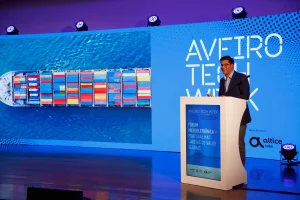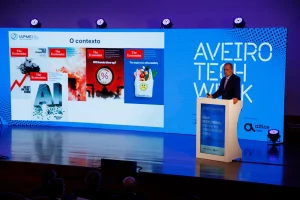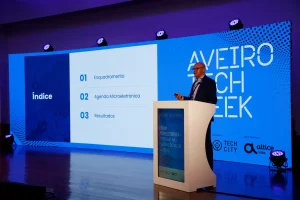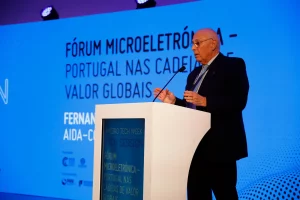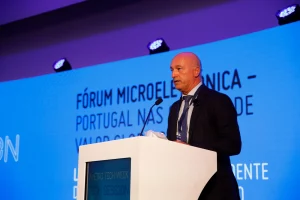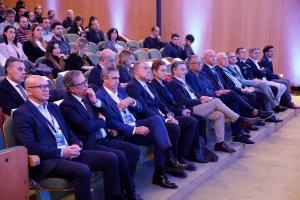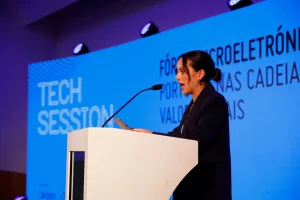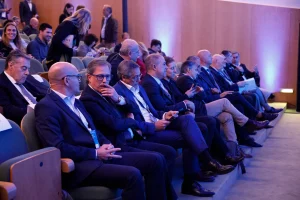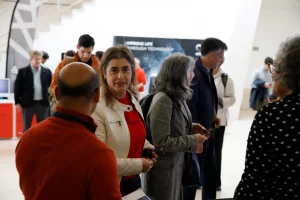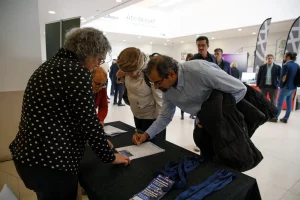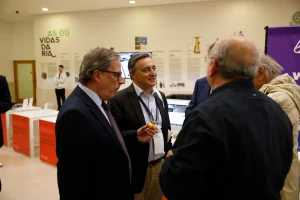



The strategic importance of the microelectronics sector for Portugal, funding opportunities and the potential to attract investment were in the spotlight at the Microelectronics Agenda Forum. The forum brought together representatives from industry, research and public bodies in Aveiro, against a European backdrop of technological transformation and reindustrialisation.
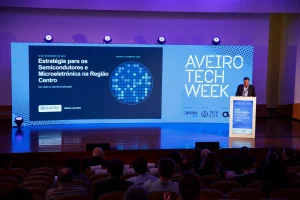
The Microelectronics Agenda Forum – Portugal in Global Value Chains was organised by AIDA CCI – Chamber of Commerce and Industry of the District of Aveiro, as part of the Mobilising Agenda for Reindustrialisation – Microelectronics, funded by the Recovery and Resilience Plan (RRP). The event took place on 19 November at the Aveiro Exhibition Centre (Parque de Exposições de Aveiro), as part of Aveiro Tech Week, organised by the Municipality of Aveiro.
The forum set out to present the results of the Microelectronics Agenda. It was also a space to reflect on Portugal’s position in the global microelectronics and semiconductor value chains, and on the investment and funding opportunities in a sector that is increasingly decisive for industrial competitiveness, technological autonomy and European economic security.
The discussions also covered key topics for the sector’s development, including funding and investment attraction, technological innovation, European cooperation and stronger industrial competitiveness. Particular attention was given to the impact of the European Chips Act on European reindustrialisation and on the internationalisation of Portuguese companies.
The event came at a particularly important moment for the future of the European semiconductor industry. Beyond the instruments already in place, such as the European Chips Act and the IPCEI ME, the preparation of the EU’s next Multiannual Financial Framework for 2028–2034, expected to mobilise close to two trillion euros, opens up new investment prospects in strategic areas, notably the digital transition, innovation and industrial competitiveness.
The Microelectronics Agenda: results and industrial capacity building
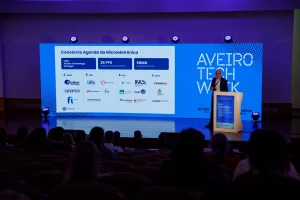
One of the highlights of the forum was the presentation of the results achieved by the Microelectronics Agenda. Developed by a consortium of 17 partners, including technology companies, universities, research centres and associations such as AIDA CCI, the initiative represented an eligible investment of €67.6 million, with a contracted incentive of €30.2 million, of which €27.9 million has already been paid. It was structured around 26 contracted Products, Processes and Services (PPS) and 21 Work Packages (WP).
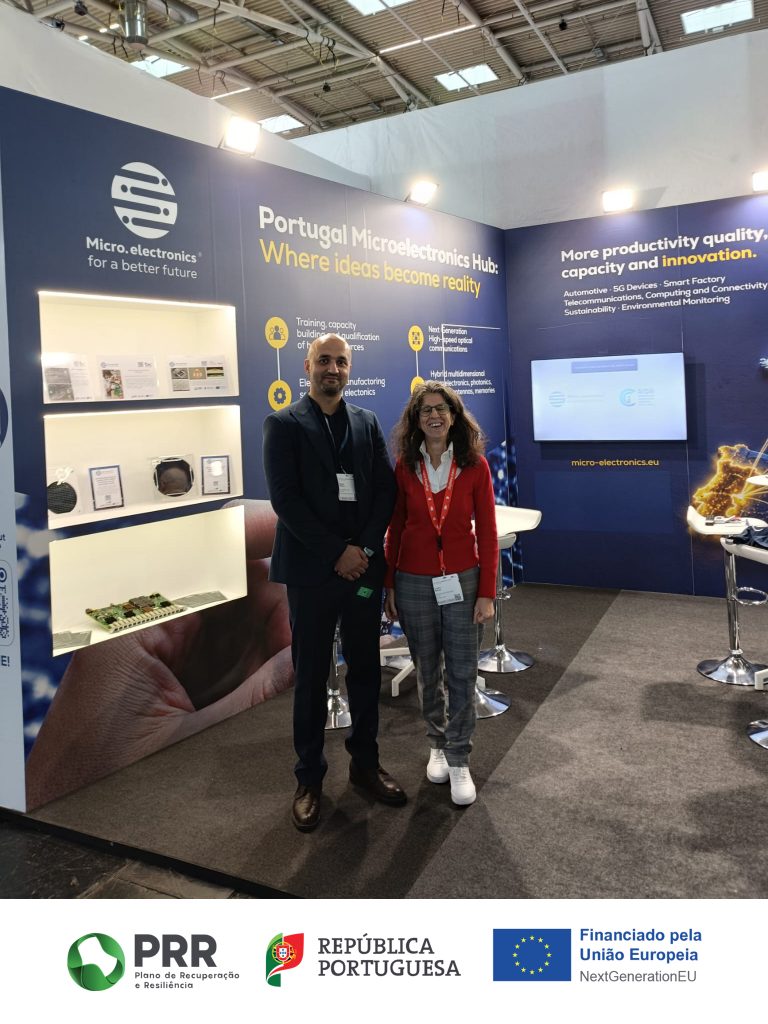
As a partner in the Microelectronics Agenda, AIDA CCI played an important role in this value chain. It promoted internationalisation activities that showcased the PPS developed and helped bring them into international markets.
Its participation in international trade fairs, prospecting visits, business missions and conferences reaffirmed its commitment to promoting national industry and innovation. It also helped create the conditions for Portuguese companies to integrate more fully into the global microelectronics and semiconductor value chains.
Opening the proceedings, António Barny, leader of the Microelectronics Agenda and representative of AMKOR (ATEP – Amkor Technology Portugal, S.A.), highlighted the consortium’s work in building the technological and industrial capacity of the national semiconductor value chain. This work spanned research and development, industrialisation, digitalisation, circularity and the exploitation of results.
The programme also included a talk by Alcino Lavrador, from CCDR Centro, on the Strategy for Semiconductors and Microelectronics of the Centro Region. He stressed the importance of bringing together business, scientific and technological capabilities to establish the region and the country in this strategic field.
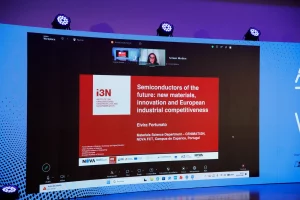
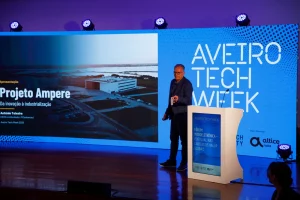
The forum also featured António Teixeira, from PICadvanced, who presented “The Micro-Ampere Project: From Innovation to Industrialisation”. Guilherme Almeida, coordinator of POEMS – Portuguese Competence Centre in Semiconductors, spoke on “Connecting Portuguese industry to the European semiconductor ecosystem”. Elvira Fortunato, full professor at NOVA FCT and vice-coordinator of CENIMAT|i3N, focused on “Semiconductors of the future: new materials, innovation and European industrial competitiveness”. Joana Catarina Mendes, researcher at the Instituto de Telecomunicações of the University of Aveiro, addressed “From thermal challenge to competitiveness: diamond for the next generation of semiconductors”.
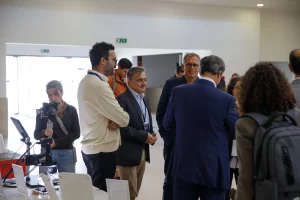
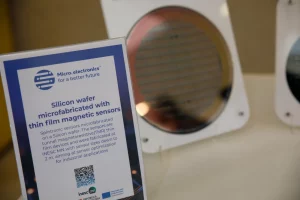
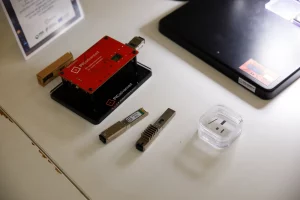
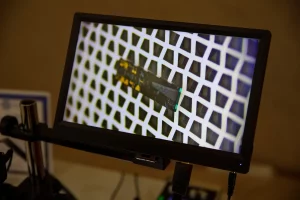
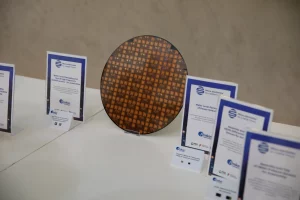
The forum also included an exhibition area dedicated to the products, processes and services developed by the partners of the Microelectronics Agenda consortium, namely HFA, INESC MN, PICadvanced, ISR, PCI, TRC, ATEP – Amkor and ATEP + INL. This space gave visibility to Portuguese technological solutions and brought companies and scientific and technological institutions closer together. It also made it possible to identify potential industrial applications, opportunities for cooperation and new business partnerships.
After the RRP: new funding mechanisms
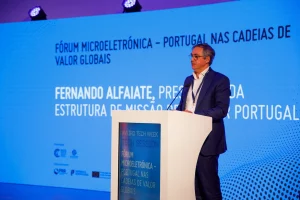
The president of the Recuperar Portugal Mission Structure, Fernando Alfaiate, said that the Microelectronics Agenda is a concrete example of the skills and investment mobilised by the Recovery and Resilience Plan (RRP). He noted that it has helped strengthen national technological and industrial capacity in a high-value sector of growing importance for European technological sovereignty.
With a total budget of around €22 billion, the RRP, which ends in December, has supported reforms and investments across the country, promoting resilience, sustainability and digital transformation, with an impact on companies, institutions and society. Looking ahead, the president of Recuperar Portugal and the vice-president of IAPMEI, Nuno Gonçalves, stressed that Portugal’s ability to mobilise skills, consolidate its business base and strengthen its participation in international value chains will be decisive in taking advantage of future European funding mechanisms.