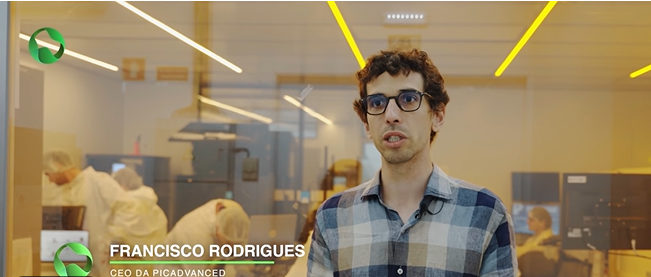



The visits took place on February 2 and 4 and involved six classes from Escola Secundária José Estevão, from the Networks, Computer Systems Technician, and Computer Programming Technician courses. In total, more than 80 students participated, having the opportunity to gain first-hand insight into the operations of HFA and into the work areas of companies such as TRC and PICadvanced, also partners of the project.
Direct Contact with Industrial Reality
During the visits, students followed the different stages of the production process of electronic equipment for areas such as mobility, lighting, aerospace, among others. The experience enabled them to understand the integration of electronics, automation, and quality control within a real industrial environment.
The following areas were also presented:
-
The packaging and logistics department, including an explanation of stock management processes and order organization;
-
The programming department, essential for the automation and optimization of production processes, ensuring greater precision and error reduction;
-
The use of 3D printing in the production of customized parts and solutions, highlighting the importance of rapid prototyping and adaptation to specific client needs.
Delivering on Electronic Labs’ Objectives
These six visits represent concrete progress toward the goals defined for Electronic Labs under the Microelectronics Agenda, namely:
-
Strengthening technological literacy in microelectronics among young students;
-
Promoting direct contact with companies in the sector;
-
Encouraging vocational orientation toward strategic technological fields;
-
Reinforcing collaboration between schools, companies, and the regional innovation ecosystem.
Following the visits, teachers expressed interest in developing a practical activity that will allow students to apply the knowledge acquired. Electronic Labs is therefore working in coordination with the school to implement an initiative in the areas of electronics, programming, and maker culture, which will include assembling components produced using 3D printing and laser cutting technologies.
This practical follow-up reinforces Inova-Ria’s commitment within the Microelectronics Agenda, particularly in creating training experiences aligned with real industry needs, contributing to the qualification of future professionals in the sector and to the sustainability of the regional technological ecosystem.
Electronic Labs has already enabled more than 1,000 students to engage directly with the microelectronics industry.